
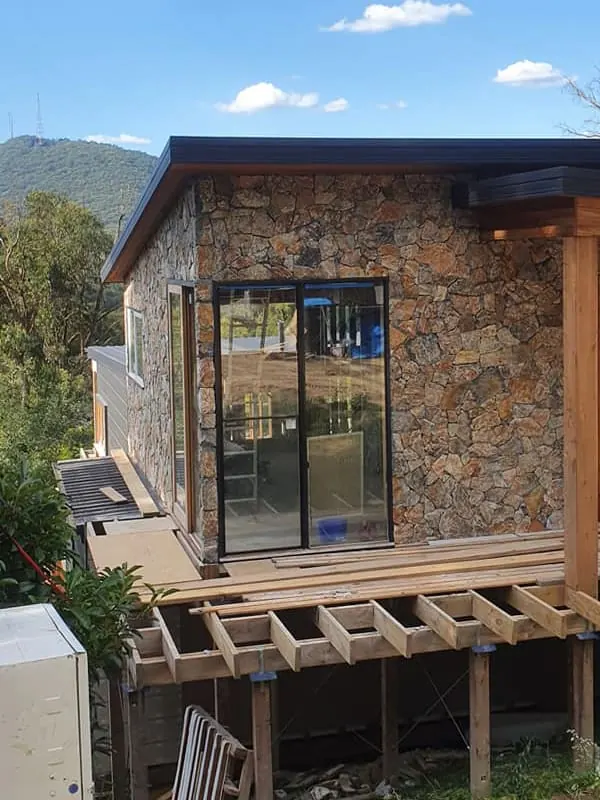
Natural Stone Exterior
Natural Stone Home Exterior
A full natural stone exterior installed on a Calgary home, with the stone selected, cut and set for freeze-thaw durability as well as appearance.
Calgary Masonry Company
5.0 33+ Google reviews
Martini Stone Masonry Ltd is an Alberta-incorporated masonry company that repairs, restores and builds brick, stone, chimney, fireplace, parging and stucco systems for residential and commercial properties across Calgary, Cochrane, Airdrie, Okotoks, Canmore and Banff.
Owner Astrit Martinaj brings more than 20 years of hands-on masonry experience to every assessment, and each project starts the same way: an on-site review of the actual masonry condition, followed by a written estimate that defines the scope, materials and project-specific conditions before work begins.
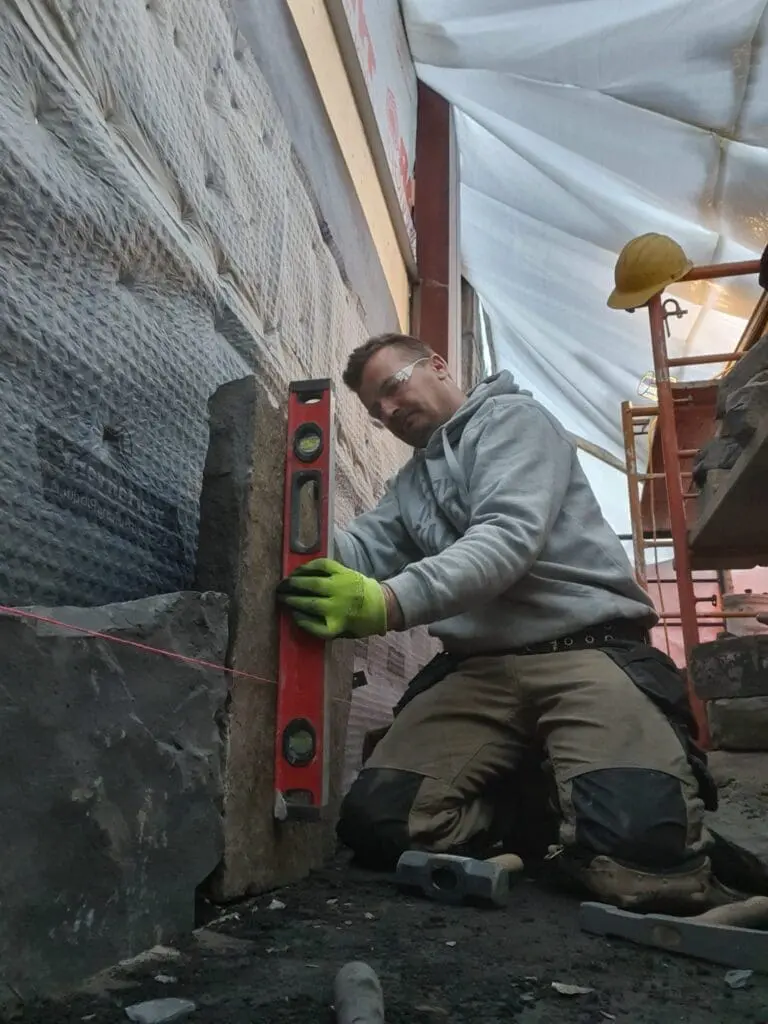
Masonry Services
Martini Stone Masonry provides six core masonry services. Each service page explains the common problems, repair methods, materials and completed local projects, so property owners can match the visible condition to the right scope of work.
Custom indoor and outdoor fireplace construction, exterior chimney brick repair, repointing, crown work and partial or full chimney rebuilds above the roofline.
Explore Fireplace & Chimney Masonry →Concrete chimney crowns and custom-fabricated metal chimney caps that stop water entry at the top of the chimney, the most common starting point of chimney deterioration in Calgary.
Explore Chimney Caps →Damaged brick replacement, mortar-joint repointing and tuckpointing for chimneys, walls, façades and retaining walls, with colour and material matching to the existing masonry.
Explore Brick Repair & Tuckpointing →Foundation parging repair, resurfacing and new cement-based parge-coat installation for cracked, loose or unfinished concrete foundation walls.
Explore Parging Repair →Exterior stucco crack repair, EIFS restoration, hail and impact damage repair, and texture matching for walls, chimneys and architectural features.
Explore Stucco Repair →Complete exterior masonry renovation planning that combines stone, brick, stucco and parging into one coordinated project, including hail-proof exterior upgrades.
Explore Exterior Renovations →Working out a budget first? See what masonry work costs in Calgary →
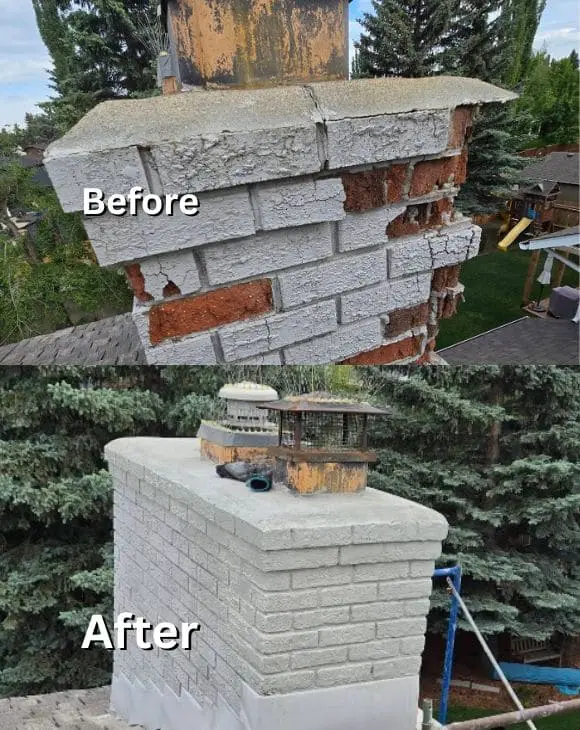
Why Martini
Masonry in Calgary fails for predictable reasons: freeze-thaw cycles that expand water inside brick and mortar, summer hail that breaks exterior finishes, and incompatible previous repairs that trap moisture. Martini Stone Masonry plans every repair around those conditions.
The existing masonry, substrate, moisture exposure and previous repairs are inspected before any scope is recommended, so temporary patches are never sold as permanent fixes.
Brick, stone, mortar and coating materials are selected for compatibility with the existing masonry and Calgary’s freeze-thaw cycles, which can swing from -30°C winters to +30°C summers.
Every estimate documents the recommended work, materials and project-specific conditions in writing before construction starts.
Martini Stone Masonry Ltd is Alberta incorporated (Corp. Access #2024268852), carries $2,000,000 in liability insurance per occurrence ($5,000,000 aggregate), holds $2,000,000 in non-owned auto coverage, and is registered with the Workers’ Compensation Board of Alberta (WCB Account #8180853).
Owner & Professional Mason
Astrit Martinaj has completed masonry construction and repair projects across Alberta for more than two decades: natural stone exteriors, brick restoration, chimney rebuilds, custom fireplaces, parging and stucco.
“Good masonry work starts with understanding the structure, the materials and the conditions, not just covering the visible problem.”Read About Martini Stone Masonry
Experience, Insurance & Professional Standards
Martini Stone Masonry combines more than two decades of hands-on masonry experience with professional insurance, WCB registration and clearly defined project recommendations.
Warranty coverage is provided where applicable and is defined according to the scope, materials and conditions of each project. Learn about project-specific masonry warranty coverage →
Completed Work
Real projects completed by Martini Stone Masonry on Calgary-area homes: chimney restorations, stone exteriors, foundation parging and stucco repair.
Natural Stone Exterior
A full natural stone exterior installed on a Calgary home, with the stone selected, cut and set for freeze-thaw durability as well as appearance.
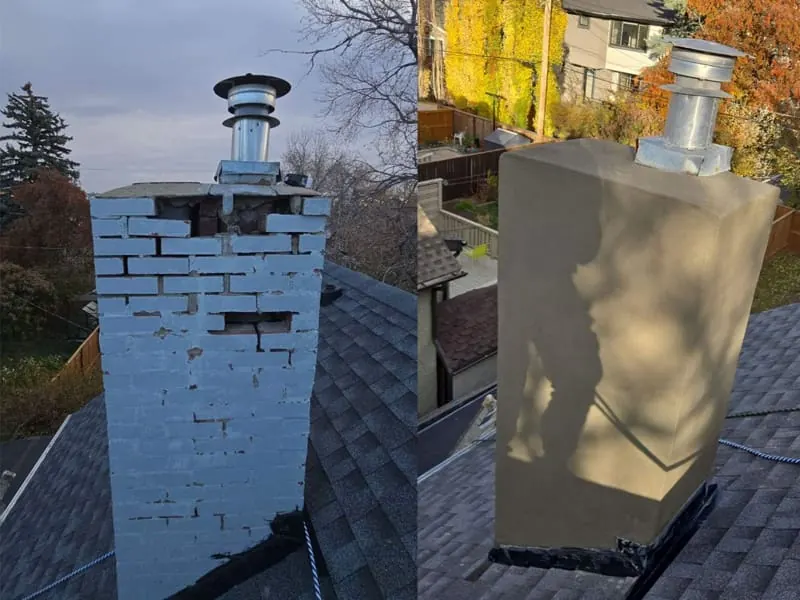
Chimney Restoration
Deteriorated chimney masonry restored above the roofline so the assembly sheds water instead of drawing it into the brickwork.
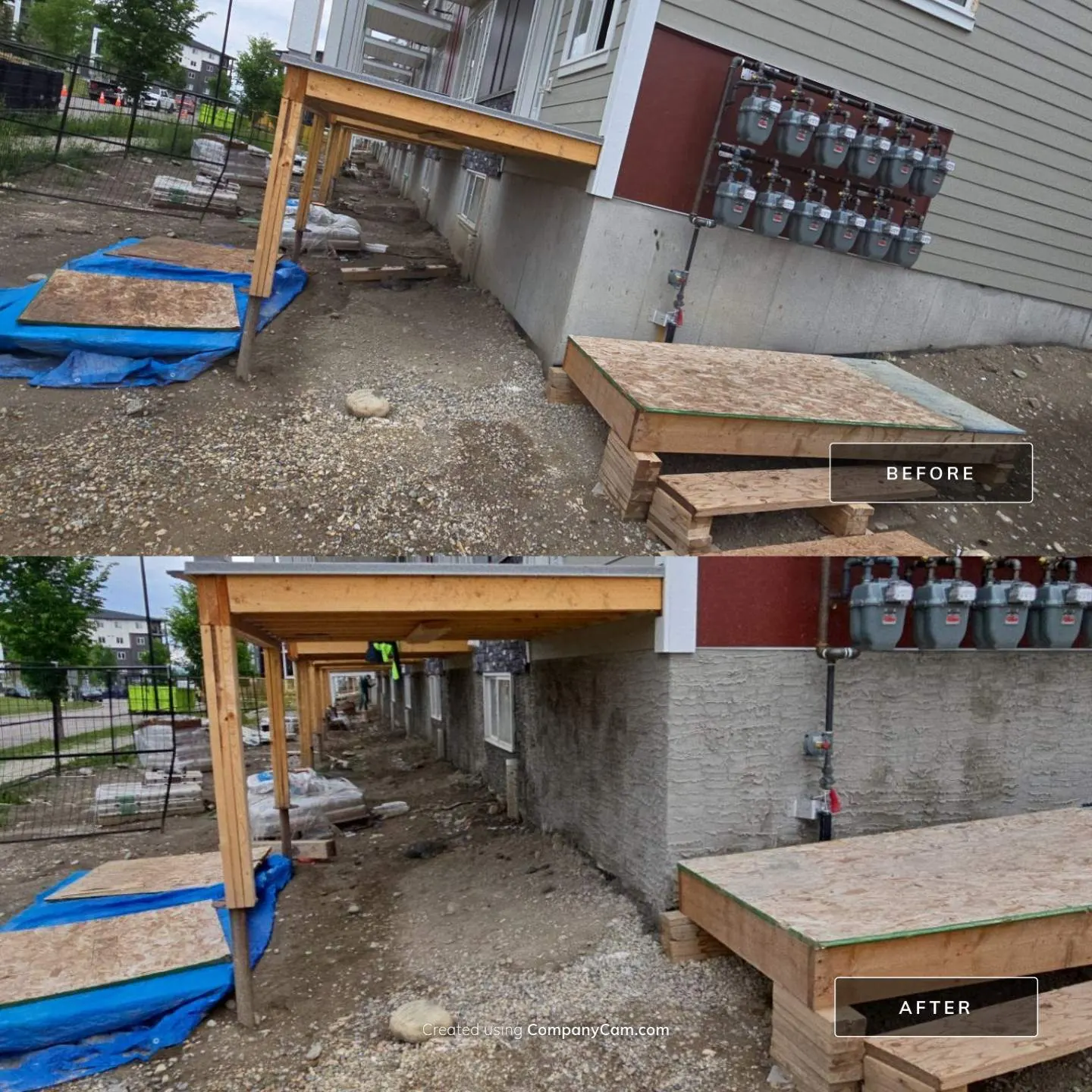
Foundation Parging
A textured cement-based parge coat applied to a new-construction foundation on Clydesdale Way in Cochrane.
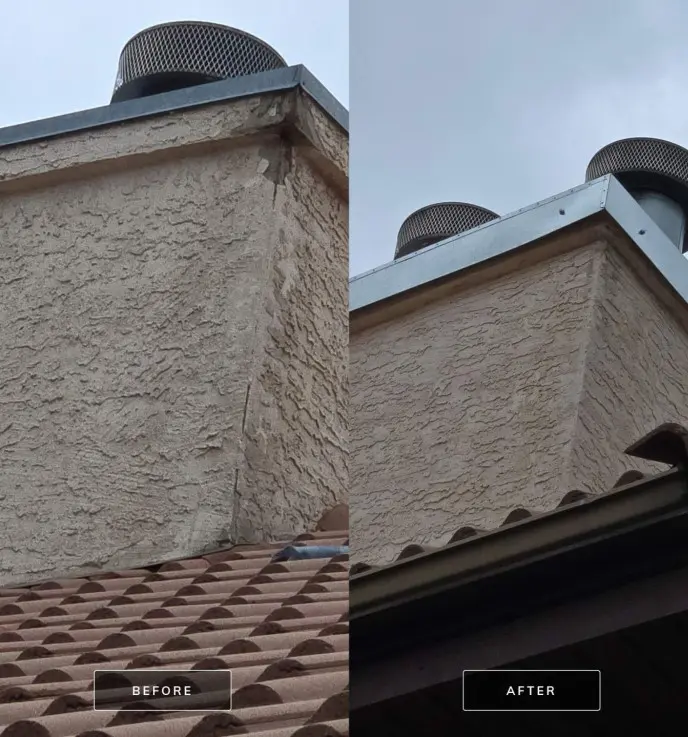
Stucco Repair
Vertical cracking in an exterior stucco chimney cut out, repaired and texture-matched to the surrounding wall.
Reviews
Feedback from the company’s 33 Google reviews. Homeowners and builders choose Martini Stone Masonry for knowledgeable recommendations, careful workmanship and professional service from the initial estimate through project completion.
5.0 33+ Google reviews
Astrit and his team did an excellent job repairing my chimney crown and cap. They were professional, honest, responsive, and worked very hard for several hours to make sure everything was done properly. I really appreciated that they repaired and reinforced the existing cap instead of pushing for a full replacement. Pricing was fair and reasonable as well. The communication was smooth, the work area was cleaned afterward, and the final result looks great. Highly recommend Martini Stone Masonry!
We chose Astrit and Martini Stone Masonry to complete our fireplace renovation project in our home. Astrit was incredibly helpful and knowledgeable throughout the whole process. He allowed the vision and design to be our own while still offering guidance and answering all questions that we had. The project took two days and they took great care in the placement of the stones, completing the grouting, and also ensuring they took care of our home. We would recommend Martini Stone Masonry to anyone looking to complete a fireplace project!
The Martini team came to our home and repaired parging, repointed stonework, replaced several cracked tiles, and repaired cracks in the tiles of our screened-in porch. Everyone on the team was professional, hardworking, and eager to do a great job. The workmanship was excellent, and we are very happy with the results. Thank you, I highly recommend this team.
I had a wonderful experience with Astrit and his team. They were able to repair my exterior stone facade in a timely manner. I was having issues sourcing the stone but somehow Astrit managed to find something similar and it looks great!
Astrit did an amazing job on our fireplace/pizza oven. 2 in 1 combination. Very happy with his work. Good communication, fair price, on time, always showed up when he said he will. Definitely recommend!
We are blown away by the quality of work done by Martini Stone Masonry! Astrit was professional, friendly, organized, time orientated etc! Not only was it top notch quality work and products but they were so easy and comfortable to deal with. I would 100 percent recommend them!
We recently had some stone removed and Astrit from Martini Masonry did an excellent job. He was professional, efficient, and clearly takes pride in his work. Astrit and his team were great to work with, respectful, hardworking, and thorough from start to finish. The whole process was smooth, and everything was cleaned up properly afterward.
Astrit and his team were exceptional! We had them install wider trim around the garage, windows and doors as well as stone work (including the chimney) and we were so pleased with the quality of workmanship and professionalism throughout the entire process we would hire them in a heartbeat!!
Astrit and his team did a great job repairing our aging chimneys above the roofline of our heritage home. They went above and beyond making sure that the finished product blended in seamlessly! Great communication as well throughout the process. The scope of work was clearly outlined and executed, and we appreciated being given options to choose from.
Astrit did a fantastic job on our masonry work. He did two fireplaces and exterior stone. Astrit is an excellent mason, fair price and on time. Couldn’t ask for better service.
I had an excellent experience with Martini Stone Masonry. The quality of their work is top-notch, everything was done with great attention to detail and craftsmanship. The crew was professional and friendly, which made the whole process smooth and stress-free. On top of that, their pricing was very fair and transparent. I couldn’t be happier with the results.
Martini Stone did an amazing job on the exterior of our new build. He was easy to work with, made many recommendations and options, and the work was completed in a timely manner and at a competitive price. Highly recommend.
We are extremely pleased with the job that Martini Stone Masonry did at our house. They have great customer service and are very knowledgeable in their craft. Very hard working and got it done fast, while also paying careful attention to detail. I would highly recommend for any stone project!
Very happy with the workmanship and professionalism of this company. And unlike other contractors that worked on our house they cleaned up their work area before they left. Highly recommend Astrit and his crew.
Astrit did an amazing job fixing our chimney and crown! Highly recommended.
Astrit was excellent to work with on our chimney cap repair. Highly recommend.
Astrit is friendly, very knowledgeable, and takes pride in his work. The job was done cleanly, professionally and communication throughout was top notch. I would highly recommend Martini Stone Masonry to anyone!
We had Martini Stone Masonry complete parging repair on our home, and we couldn’t be happier with the results. From start to finish, they were professional, reliable, and detail-oriented. The workmanship is excellent, the repaired areas blend in seamlessly and really improve the overall look of our foundation. Communication was clear, the job was done on time, and everything was cleaned up beautifully afterward.
We called Martini Stone Masonry to do a few small stucco repairs. Astrit made suggestions on how to improve an old pool wall that was collapsing. He went above and beyond what we expected, and we are very pleased with the workmanship and results.
Can’t recommend Astrit and his team highly enough. He went the extra mile on my chimney repair this winter, battling the weather windows and working into the darkness some nights to get things weatherproofed. There was great communication throughout, fair pricing and we’re super happy with the end product.
So glad to have found Astrit and team. A pleasure to have around and very beautiful work. We love our stone work!
Astrit the owner and his helper repaired our fireplace chimney. He gave a fair price, did exactly what was required, when promised, and left site clean as found. I recommend his company!
Astrit was great from start to finish! Helped us decide on the perfect fireplace surround in our Canmore condo. Looks amazing! Highly recommended! Hope to work with you again.
High quality masonry work and fair pricing. A great team, polite and efficient, Martini Stone Masonry was a pleasure to deal with.
Highly recommend. The crew were friendly, professional and got the job done right in quick order. Just what you want from a contractor.
Awesome detailed work delivered on time at a fair price. Highly recommend!
I highly recommend Martini Stone Masonry Limited. They did a very good job and I am a very satisfied customer indeed.
I would hire these guys anytime!! Trustworthy and very dedicated to doing good job!
Astrit knows his stuff. Amazing work. Would recommend to any friend or family.
Astrit and his crew were friendly, attentive, and reasonable. Moreover, they addressed the issues that were brought to their attention. I would recommend this team to anyone looking to get a masonry work done.
We used Martini Stone Masonry to repair and repaint our breeze block retaining wall. I was very impressed with Astrit and his team’s work. They were very transparent up front on cost, work involved and duration. I was also impressed with their responsiveness and open communication. We are very happy with how the wall turned out and its new fresh appearance.
Astrit did an amazing job on the stone on our garage while we were away in Europe.
Service Areas
Martini Stone Masonry is a service-area masonry company. Crews work throughout Calgary, in all quadrants, plus Cochrane, Airdrie, Okotoks, Chestermere, Canmore and Banff. Project availability depends on location, scope, access and scheduling.
Common Questions
Answers to the questions that come up most often before hiring a masonry company in Calgary: credentials, scope, estimates and service area.

Answered by
Astrit Martinaj
Owner & Operator · 20+ years of masonry
Verify four things before hiring: Alberta incorporation or licensing, WCB registration, minimum $2 million liability insurance, and a written estimate that defines scope and materials. Martini Stone Masonry publishes all four credentials, including its Corp. Access number (2024268852) and WCB account (8180853).
Martini Stone Masonry repairs and builds brick masonry, natural stone, chimneys, fireplaces, chimney caps and crowns, foundation parging and exterior stucco. Larger multi-surface projects are planned as complete exterior renovations.
Yes. The company completes localized repairs (single bricks, mortar joints, cracks), larger restorations (repointing, resurfacing, partial rebuilds) and new construction (fireplaces, stone exteriors, new parging).
Yes. On-site assessments and written estimates are free for properties within the service area.
Calgary and area, with regular masonry projects completed in Airdrie as well as Cochrane, Okotoks, Chestermere, Canmore and Banff, subject to project scope and scheduling.
Have a masonry question about your property?
Request a Free On-Site EstimateRequest an Estimate
Describe the property, the visible condition and the type of masonry work required. Photographs help with the initial review before an on-site assessment is scheduled.
Project Information
Include the project location, the masonry service required and any available photographs. These details help us understand the initial scope before arranging the next step.
Calgary, Cochrane, Airdrie, Okotoks, Canmore, Banff and surrounding Alberta communities.
Photographs and project details can be included with your inquiry.
Most estimate requests receive an initial response within one business day.
Free Project Review
Complete the form and provide as much information as possible about the property, the condition of the existing masonry and the work you would like us to assess.