
By Astrit Martinaj / Published : August 2, 2025 / Last updated : December 2, 2025
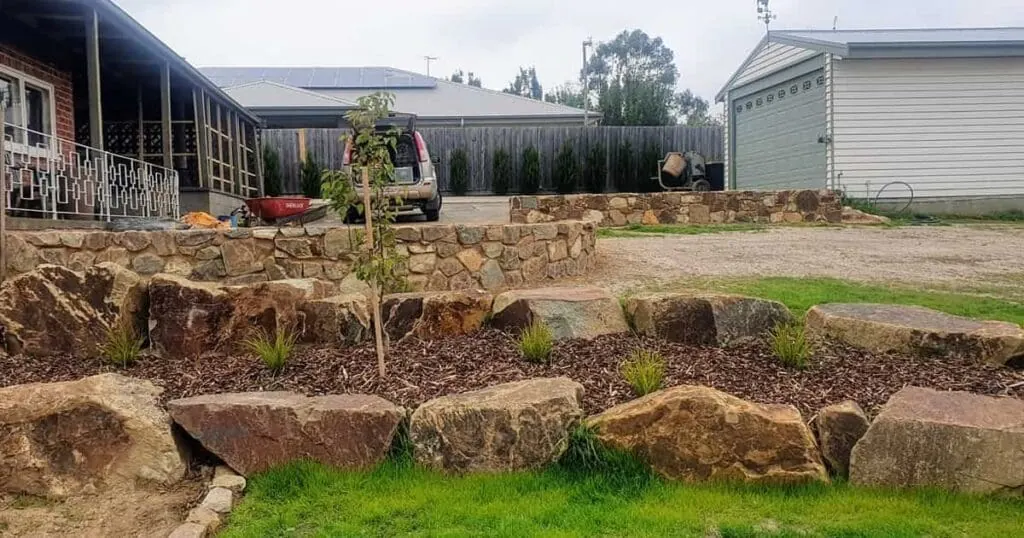
When homeowners think about renovating their homes to upgrade their interior or exterior, the selection of materials can either make or break a project. There are many choices from which to choose, but the natural stone remains one of the most interesting, and undoubtedly the most exceptional when looking for beauty and long-term value unmatchable by synthetic imitations.
Key Takeaways
Before covering all you need to know, here are the key points about natural stone benefits:
- Potential longevity: Properly selected and installed stone can remain serviceable for a long time, but performance depends on the stone, exposure, assembly, workmanship, and maintenance.
- Classic Timelessness: The timeless beauty of natural stone doesn’t get old; neither does the functionality or usability
- Weather suitability varies: Stone selection, porosity, finish, detailing, and exposure determine whether it is appropriate indoors or outdoors.
- Design contribution: Stone can improve appearance and function, but resale value is project- and market-dependent and should not be promised.
- Environmental trade-offs: Stone may have durability and reuse advantages, while quarrying, processing, and transport still have environmental impacts.
- Maintenance varies: Properly installed stone may be relatively low-maintenance, but it still needs cleaning, inspection, and material-appropriate care.
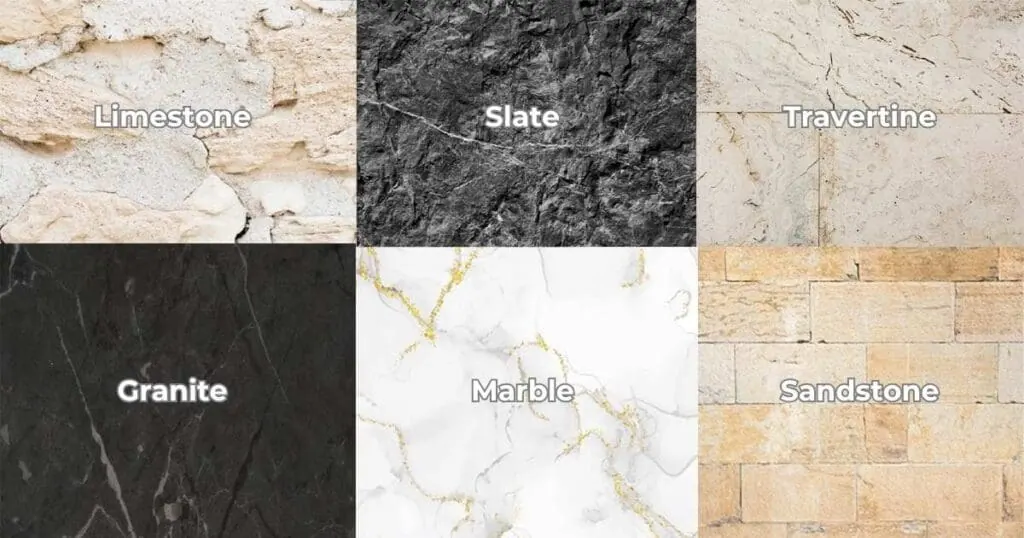
Six popular stone varieties showcasing the diverse natural stone benefits: limestone’s smooth elegance, slate’s distinctive texture, travertine’s unique character, granite’s durability, marble’s luxury appeal, and sandstone’s natural colors, each offering unique advantages for your masonry project.
Comparing the Natural Stone Characteristics
The Physics of Stone’s Strength
Natural stone forms with different mineral compositions, densities, pore structures, and finishes. Those differences affect appearance, workability, absorption, and durability. Geological age alone does not establish how a particular stone will perform; the product’s technical information and intended use still matter. Natural Resources Canada is a useful starting point for Canadian geological information.
Variety of options in Natural Stone
With a variety of stone to choose from, yours will be an unparalleled match. Popular stone options include:
- Granite: An extremely hard stone that is resistant to stains
- Limestone: It will give your landscape a warm, natural look and great workability
- Sandstone: Offers natural slip resistance and comes in a range of colors
- Marble: Offers unrivaled beauty for all types of indoor use
- Slate: Yields unique textures and is naturally resistant to the weather
- Travertine: Excellent long-term durability, and the tiles come with naturally occurring voids
Strength and Longevity: The Basis for All Other Natural Stone Benefits
Centuries of Proven Performance
Historic stone structures show that some stonework can endure for centuries, but those examples do not provide a service-life guarantee for a modern installation. Modern performance depends on the stone, anchorage or bedding, drainage, joints, exposure, and maintenance. Avoid treating a fixed lifespan as a promise.
Resistance to Environmental Stressors
The geological origin of natural stone makes it unlikely to deteriorate quickly or lose aesthetic or performance quality due to exposure to sunlight, wind, rain, and pollutants:
- Freeze-thaw exposure: Absorption, saturation, pore structure, and detailing affect risk; hardness alone does not guarantee freeze-thaw performance.
- Sun exposure: Many stones retain their colour well, but minerals, finishes, and surface treatments vary.
- Chemical exposure: Cleaners and pollutants can affect some stones, so use products compatible with the specific material.
- Impact: Dense stone can be robust, but edges, thin pieces, and softer stones can still chip or break.
Do not compare cladding by a single assumed lifespan. Initial cost, maintenance, repairability, replacement access, and the performance of the entire wall assembly all affect value over time.
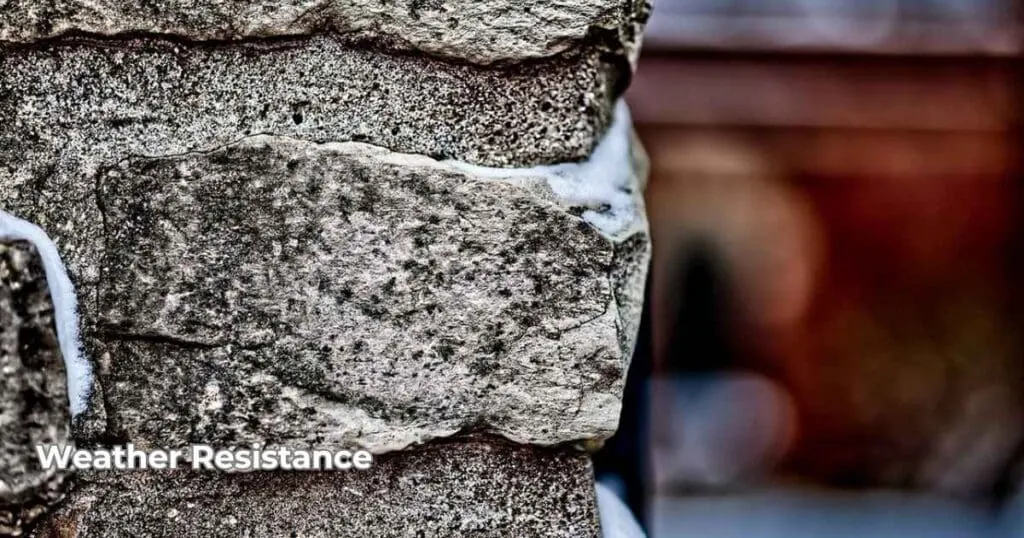
Natural stone includes exceptional weather resistance. This stonework maintains its integrity and appearance despite Calgary’s harsh freeze-thaw cycles and extreme temperature fluctuations.
The Beauty Factor: A Beauty That Never Fades
Inherent Visual Characteristics
Appearance: The advantages of natural stone are not merely functional; it is also a visually pleasing finish for the ceiling. The needle stone itself has its own natural patterns, colors, and textures formed by geological processes that cannot able to be replicated. These differences also mean that there are no two installations that look the same, and homeowners can have a truly customized look.
Stone’s visual characteristics include:
- Natural color variations: Tonal progression enhances the depth and luster.
- Unique grain patterns: Mineral streaks and veining will create each unique detail
- Textural variety: From smooth, polished surfaces to rough-hewn finishes
- Aesthetic Range: Available in different thicknesses and a variety of shapes for creative applications
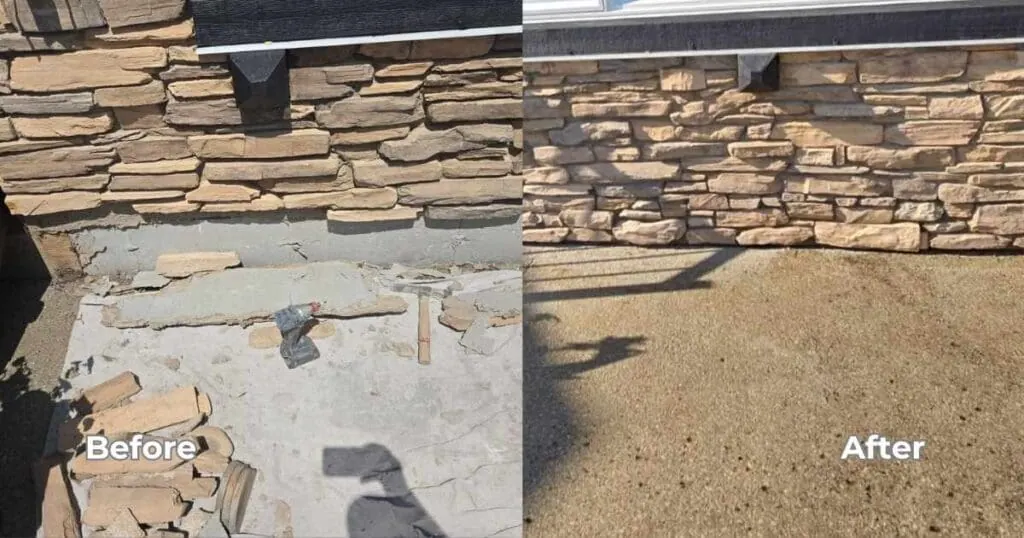
Witness the transformative power of natural stone benefits: professional masonry restoration converts damaged concrete into beautiful, durable stonework that enhances both aesthetics and long-term value.
Design Versatility Across Applications
Natural stone pairs well with nearly every architectural style, and can work with both existing structures and new construction, from a clean modern look to traditional styles like colonial. The aesthetic advantages of stone, inside and out:
Popular Uses:
- Facades of buildings and fireplace surrounds
- Kitchen countertops and backsplashes
- Outdoor patios and walkways
- Vanities and tub, and shower surrounds
- Retaining walls and landscaping building elements
Weather Proof: Made to Survive in Nature’s Extreme Conditions
Temperature and Moisture Management
The thermal properties of natural stone make it an ideal material to keep your pool deck warm against the harshest of winters and cool in the hot summer months. Hard stones such as granite have a low rate of thermal expansion, which is the rate of change of the dimension of a body with temperature. This stability prevents the tendency for bending, cracking or wear and tear so prevalent in material that expands and contracts from fluctuating weather patterns.
When installed correctly, natural stone will act as a barrier to the seepage of water. Stone is not able to rot, rust, or otherwise deteriorate when in contact with water, as are other materials, so it will provide years of use while still looking its best through proper maintenance and sealing.
Impact and Wind Resistance
The density and strength of stone can make it far more wind-blown debris and impact-resistant than metal roofing. This feature can be especially beneficial in regions susceptible to storms, where the lighter-weight materials could sustain substantial damage from hail or other flying debris.
Natural Stone Benefits for Property Value Growth
Return on Investment Statistics
Natural stone may improve a project’s appearance and appeal to some buyers, but the resale effect is location-, design-, and market-dependent. No fixed return-on-investment percentage should be assumed for a countertop, patio, fireplace, or exterior feature.
Long-term Financial Benefits
In addition to the initial resale value, stone features also offer long-term financial benefits:
- Maintenance costs vary: Cleaning, joint repairs, sealing where appropriate, and access all contribute to lifecycle cost.
- Thermal performance is assembly-dependent: Stone’s thermal mass does not by itself establish lower heating or cooling bills.
- Replacement remains possible: Stone can crack, stain, spall, or require removal when the supporting assembly fails.
- Insurance is policy-specific: A stone feature does not automatically qualify for a lower premium; ask the insurer about the actual installation.
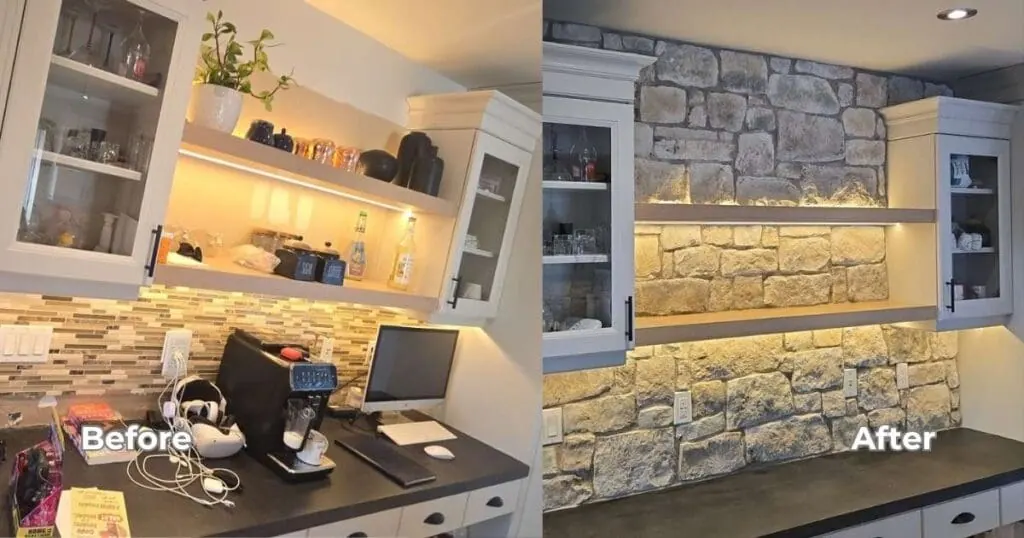
Kitchen renovation showcasing natural stone benefits for property value: transforming a standard backsplash into an elegant stone feature wall that adds luxury appeal and increases resale value.
Green and Eco-Friendly Advantages
Natural Resource Utilization
Natural stone can offer durability and reuse benefits, but it is not impact-free. Quarrying, cutting, finishing, packaging, and transportation consume energy and create emissions. Compare the specific product and source rather than calling every stone installation sustainable.
Minimal Processing and Recyclability
Some stone can be salvaged and reused, but reuse depends on the installation, condition, dimensions, and local recovery process. Stone is not automatically recyclable or zero-waste, and processing still uses energy.
Local sourcing can reduce transport for some projects, but availability and suitability must be verified for the specific stone. A local quarry does not by itself prove lower impact or climate suitability.
Maintenance: Get the Look You Want with Little Effort
Daily and Routine Care
One of the best natural stone benefits is that it requires minimal maintenance. Once the stone is installed, you will need to use the cleaning products for periodic maintenance of it to keep it in the same new condition. Most stone surfaces require only:
- Regular cleanings: Mild soap and water solutions
- Periodic cleaning: Use a product compatible with the stone and finish; avoid assuming a concentrated cleaner is safe.
- Inspection when needed: Check joints, drainage, staining, movement, and surface changes, especially after severe exposure.
- Sealing only where appropriate: Follow the stone and sealer manufacturer’s guidance. There is no universal resealing interval.
Professional Maintenance Services
Although stone should be relatively low-maintenance, occasional professional care will help it look and perform at its best. Professional services include deep cleaning with restoration, resealing or rejuvenating sealer, and repairs as necessary.
When the maintenance of these materials is factored over the longer life of stone, the total cost of ownership is frequently less expensive than materials that must be replaced often, are difficult to maintain, or require fighting on a regular maintenance.
The investment: Choosing Natural Stone for Your Project
Selection for Various Applications
Selecting stone of the proper type for specific uses will optimize the natural stone benefits available to you for that project.
- High-traffic areas: Denser, harder stones, such as granite or quartzite
- Damp spots: Low-porosity stones or well-sealed ones
- Decorative uses: Stones chosen for their natural beauty and appeal.
- Structural applications: Stones with sufficient load-bearing forms
Working with Professional Masonry Contractors
A professional masonry installation is necessary to maximize the benefits of natural stone. Experienced masonry contractors have the expertise to help you choose your product, advise on optimal design, proper stone installation techniques, and ongoing maintenance requirements to ensure you get the value you deserve from your investment.
Natural stone is often a more expensive initial investment compared to other types of installations, but with its long lifespan, ability to survive cold and heat with very little maintenance, and how it enhances a property, the price is often quickly justified.
Stone exteriors are usually planned alongside the rest of the envelope rather than in isolation. See exterior renovations in Calgary for how stone, brick, stucco and parging are coordinated into one project, or browse completed masonry projects for finished stone exteriors, veneers and chimneys.
Conclusion
Natural stone durability, beauty, sustainability, and value will stand the test of time in any home or commercial application. From the immediate appearance factor to the enduring cost-effectiveness, natural stone provides you with benefits that man-made products are unable to live up to. Whether you are planning a small accent project or a major construction development, you can’t go wrong with the versatility and durability of natural stone.