
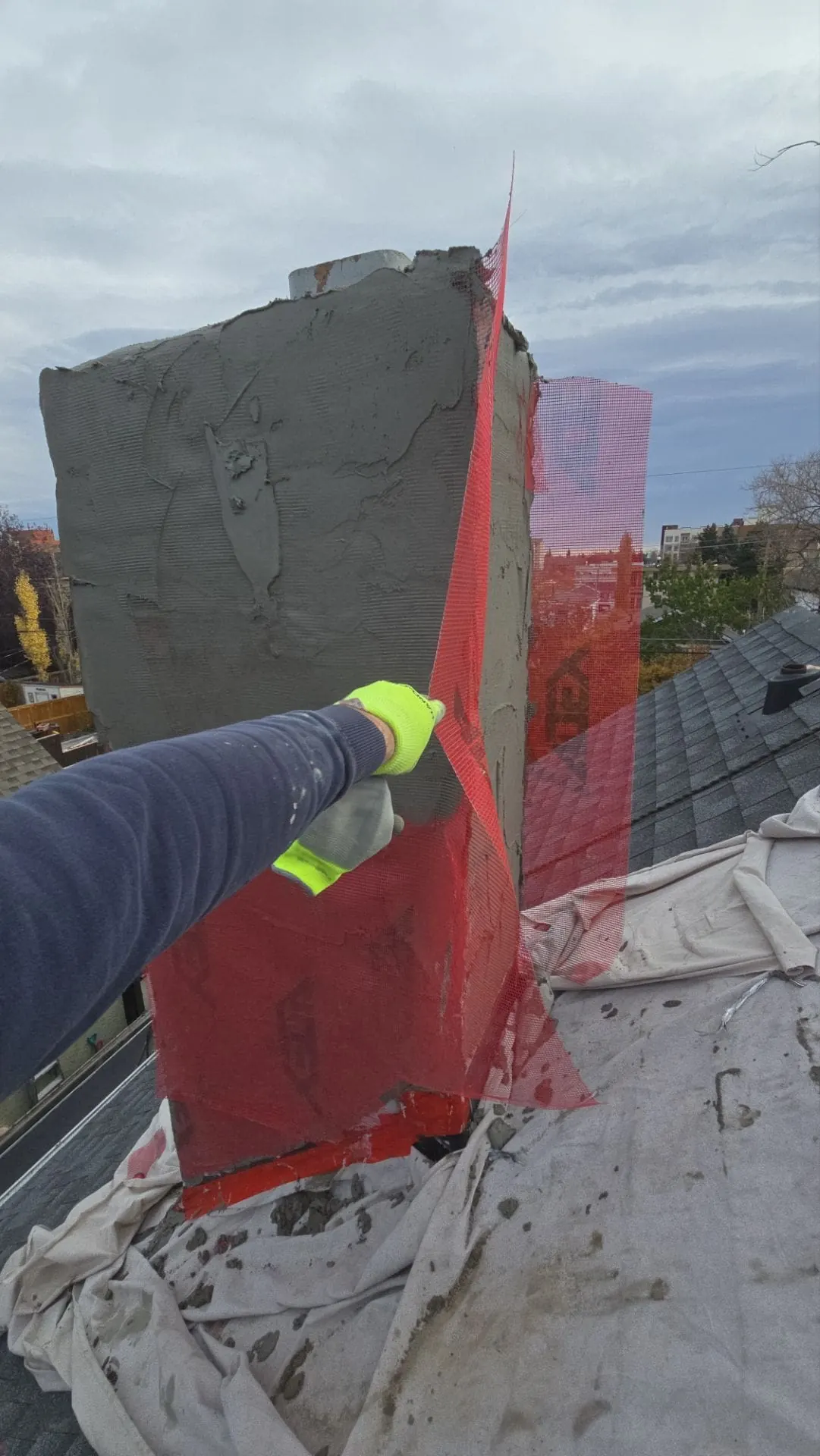
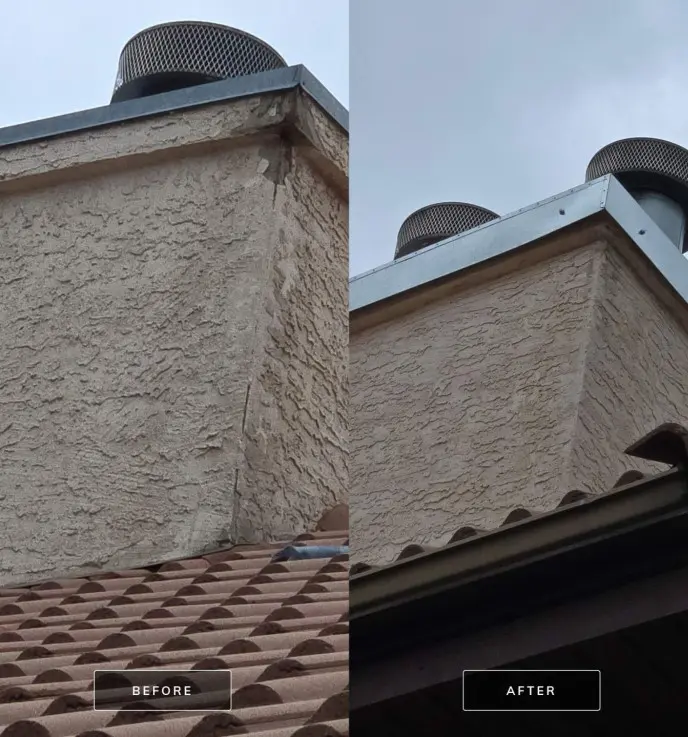
Before-and-after views of a textured stucco chimney surface. The image shows the visible result of restoration; it does not by itself establish the original cause or the condition of concealed layers.
What Stucco Maintenance Is Actually Checking
Stucco maintenance is primarily an inspection of how the wall sheds and manages water. Water on the face of the cladding is expected. Water that enters through a crack, joint, penetration, or failed transition may be able to drain safely in one assembly and become trapped in another.
Traditional three-coat stucco and EIFS are not interchangeable systems. Traditional stucco is a cement-based layered finish over reinforcement; EIFS uses insulation, a base coat, reinforcing mesh, and a finish coat. Barrier EIFS and drainage-capable EIFS also manage incidental water differently. EIFS vs Traditional Stucco explains those system differences before a maintenance observation is treated as a diagnosis.
A useful inspection asks four questions:
- What is visible? Note cracks, flaking, staining, efflorescence, open joints, impact marks, soft-looking areas, and changes around openings.
- Where could water enter? Look at joints around windows and doors, utility penetrations, ledges, roof and wall transitions, and the base of the wall.
- Where should incidental water drain? Check that visible drainage openings or weep details are not blocked by paint, caulk, debris, soil, or landscaping.
- What remains unknown? A surface observation cannot establish the full condition of the substrate, sheathing, insulation, or concealed moisture.
Signs to Record During a Routine Inspection
Cracks, flaking, and separation
A fine crack may be limited to the finish and may not mean that the wall assembly has failed. A crack that is recurring, widening, open, associated with staining, or accompanied by separation deserves closer attention. The pattern and location matter: a crack at a material transition or opening can have a different implication from isolated finish checking.
Peeling and delamination are also descriptions, not diagnoses. A loose finish coat, a separated brown coat, and an EIFS base coat separating from its foam are different repair conditions. A change in sound when a comparable area is tapped, movement under light pressure, or a visible edge may help identify where to investigate, but none of those observations proves the cause or the full extent. The Stucco Peeling in Calgary guide covers that distinction in more detail.
Staining, efflorescence, and interior signs
Staining, white mineral deposits, or organic growth can indicate that water has moved across or through part of the wall, but they do not identify the entry point by themselves. Interior staining, condensation, mould, or deteriorated finishes near an exterior wall are reasons to investigate promptly; they do not, on their own, prove that the stucco is the source.
Photograph the area, note its location relative to openings and transitions, and record whether the condition changes after wet weather or winter. Avoid sealing over a symptom before the path and affected layer are understood.
Joints, flashings, and drainage openings
Sealant joints at windows, doors, and penetrations can shrink, crack, chalk, or separate from one side of the joint. That is a reason to review the joint and the surrounding assembly, not proof that the joint is the only problem. Accessible, isolated sealant deterioration may be suitable for routine maintenance when the surrounding materials are sound and the replacement product is compatible; multiple failed joints, movement, staining, or suspected moisture behind the joint warrant professional assessment.
Flashings and sills are intended to direct water away from vulnerable transitions. A displaced, damaged, or poorly integrated flashing can contribute to water entry, but the actual path depends on the surrounding assembly and installation. Do not assume that adding caulk or coating over a transition restores its drainage function.
Drainage openings and weep screeds serve a different purpose from seals: they provide an exit for water that has entered a drainage-capable assembly. Keep visible openings clear, but do not fill, enlarge, or alter them without knowing the system. A sealed joint keeps water out; a drainage opening helps water that got in leave. Confusing those roles can make a maintenance attempt counterproductive.
At grade, keep soil, mulch, vegetation, and accumulated debris from obscuring the base of the wall or its drainage details. Keep snow from being packed against the wall where practical. These are housekeeping measures, not proof that a wall has a drainage defect.
What Homeowners Can Safely Maintain
Routine maintenance is appropriate when the work is accessible, low-risk, and limited to keeping the exterior observable and unobstructed:
- keep drainage openings and the base of the wall visible and free of loose debris;
- keep downspout discharge and surrounding grade from directing water toward the wall, without treating this as a substitute for repairing a defective drainage system;
- rinse light surface dirt gently if the system and manufacturer guidance allow it;
- document new cracks, stains, impact marks, or changes around openings with dated photographs;
- arrange an assessment rather than experimenting when the condition is spreading, recurring, soft, loose, or associated with interior moisture.
Avoid aggressive pressure washing. Water driven into cracks, joints, penetrations, or vulnerable transitions can worsen an existing entry path, and the suitable cleaning method varies by finish and system. If a surface needs more than gentle cleaning, follow the applicable product or system guidance or obtain advice before proceeding.
Homeowners should also be cautious about renewing sealant. A visible failed bead may be a maintenance item, but replacing it without considering movement, adhesion, adjacent flashing, and the condition behind the joint can conceal rather than solve the problem. Do not treat a general sealant instruction as a universal repair method for stucco or EIFS.
When Maintenance Becomes an Assessment
Professional stucco repair assessment is warranted when:
- cracks are open, recurring, widening, or concentrated around openings and transitions;
- finish material is peeling, loose, bulging, or separated;
- a comparable area has a changed sound or feels unusually soft, while recognizing that these are screening observations only;
- staining, efflorescence, organic growth, or interior moisture evidence keeps returning;
- multiple joints have failed or water appears to be entering behind a joint;
- a repair would require removing layers, matching an existing finish, or determining whether the wall is traditional stucco, barrier EIFS, or drainage-capable EIFS.
Martini Stone Masonry can assess visible stucco conditions and define an appropriate stucco-repair scope where the work falls within its established service. That does not mean every concealed building-envelope, roofing, window, door, drainage, waterproofing, or structural condition is a stucco repair. Depending on the assembly and evidence, a building-envelope specialist, roofer, window or door contractor, drainage professional, or engineer may need to address the related condition. The correct referral is part of an honest scope decision.
If hail or another storm event is involved, document the visible condition and its timing without assuming that the event caused every defect. The Alberta Insurance and Stucco Damage guide explains the difference between documenting damage and making an unsupported coverage conclusion. If the visible damage is from birds or repeated impact, Woodpecker Damage to Stucco in Calgary covers that narrower situation.
Maintenance, Painting, and Repair Scope
Painting or recoating is not automatically maintenance. A coating applied over a damp, friable, contaminated, or incompatible surface may fail, and a coating can change how a traditional stucco surface dries. Whether recoating is suitable depends on the existing finish, substrate condition, moisture history, product requirements, and preparation.
Likewise, a patch is not automatically the right answer for every crack or loose area. The repair material and sequence must match the affected layer and system. A finish-only repair may be reasonable where the underlying layers are sound; deeper delamination, substrate deterioration, or concealed moisture can require a different scope. Inspection should precede a recommendation when the visible condition does not establish which layer has failed.
For the commercial repair path, see Stucco Repair in Calgary. For cost factors and repair-scope context, see Stucco Repair Cost in Calgary.
Request a Stucco Assessment Call 587-227-9122
Sources: Stucco construction, failure modes, and maintenance: Portland Cement Association stucco technical guidance. EIFS system construction and maintenance: EIFS Industry Members Association technical documentation. Drainage and building-envelope distinctions: National Research Council of Canada building-envelope guidance. Product-specific cleaning, sealant, coating, and curing requirements vary by manufacturer and system; consult the applicable technical documentation.