
By Astrit Martinaj / Published : February 24, 2026 / Last updated : April 7, 2026
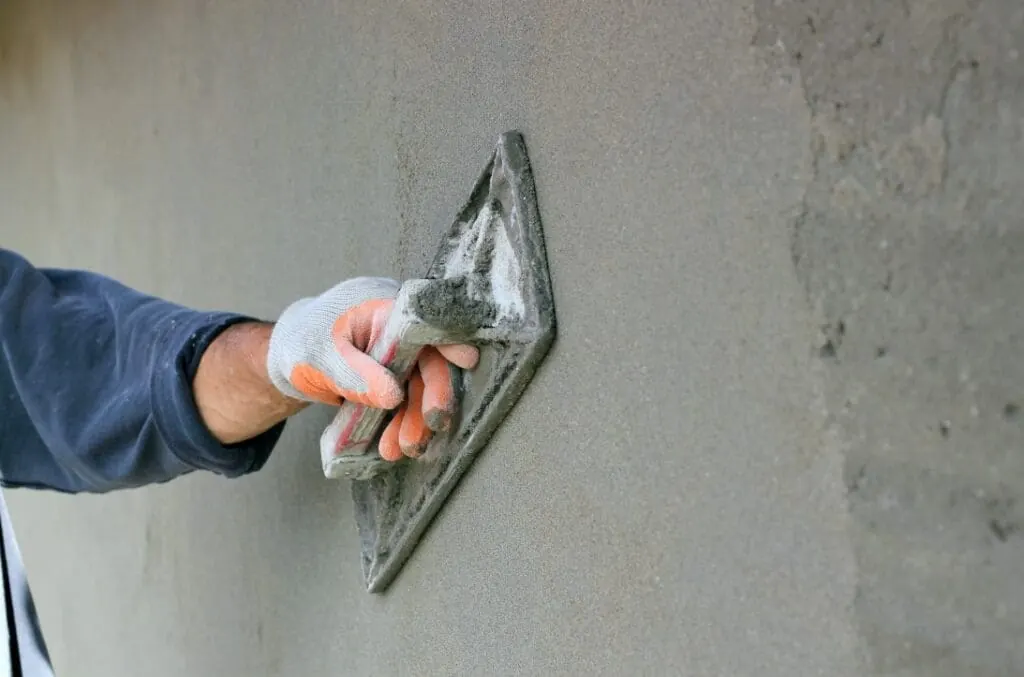
Spring in Calgary has a knack for uncovering what was hidden beneath the frost. As the ground thaws, the snow disappears, and the fine cracks in the foundation that were barely noticeable in the fall are now quite evident. Perhaps a small piece of the parging has peeled away near a window well. Or perhaps a chalky white substance is appearing on the concrete, which is known as efflorescence. Most people simply dismiss it. And why wouldn’t they? Until the next freeze-thaw cycle widens that crack and allows water to enter the home.
Calgary foundations and exposed parging face repeated freeze-thaw conditions and rapid temperature changes. Those conditions can make moisture-related deterioration more noticeable, but the effect depends on the wall, the drainage conditions, the material and the workmanship. Parging can be part of a repair scope; it is not a universal substitute for correcting moisture or structural problems.
Why Calgary’s Climate Attacks the Foundation Face First
Parging is the thin cement-based coat on the exposed part of your foundation — what parging is, and what it can and cannot do, covered separately. What matters here is why that coat has a harder life in Calgary than almost anywhere else in the country.
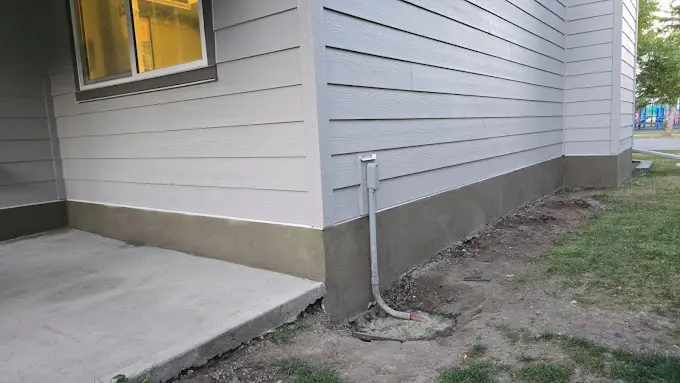 Freshly applied parging on a residential foundation in Calgary // Credits Google Business Profile
It is the surface that takes the weather, which is exactly why it is the first thing to show that something has changed.
In Alberta, foundations are continually subjected to extreme conditions. The heavy rainfall of springtime causes the melting snow to saturate the soil around the foundation. Once the rain stops, the saturated soil exerts greater hydrostatic pressure on the foundation walls. Overnight, the temperatures drop, and the water that was previously trapped in the foundation walls freezes, causing it to expand. It is this expansion that causes the cracks in the foundation walls.
Product suitability, preparation and curing requirements depend on the selected system and the conditions at the wall. A product label or a local climate description alone does not establish how a particular parge coat will perform.
The Alberta Building Code requires below-grade walls to be protected from moisture, and that protection is an assembly — grading, weeping tile and a damp-proofing membrane do the work of keeping water out. The parge coat is the weathering surface above it, not the barrier itself. When the coat goes, the structural concrete is what is left facing a Calgary winter.
5 Signs That Your Foundation Requires Parging
Damage to the foundation of your home typically occurs slowly. Below are some of the common indicators of potential damage:
1. Cracks That Widen, Recur or Admit Moisture
Fine cracks can have different causes and a visible size alone does not determine the repair scope. A crack that widens, recurs after repair, is associated with moisture, or continues into the substrate deserves assessment rather than a universal size-based decision.
2. Efflorescence (White Powdered Substances)
Efflorescence is the appearance of a chalky white substance on the surface of your foundation. This occurs when water migrates through the concrete and deposits minerals on the surface. When left untreated, this process will continue indefinitely: water enters the foundation, minerals exit the foundation, and the surface of the foundation deteriorates.
3. Pieces of Parging Are Peeling Away
If chunks of parging are peeling away, cracking, or separating, then the protective coating has failed. Without a protective coating, the exposed concrete is now vulnerable to precipitation (rain, snow, etc.). This is generally when parging repair in Calgary is required.
Once the protective coating is damaged or dislodged, patch jobs to repair the area rarely last longer than a few years unless the surface is properly prepared prior to application.
4. Moisture Appears in the Walls Following a Chinook Event
Chinook events are unique to this region. During Chinook events, the temperature can fluctuate by 30 degrees Celsius or more in a very short period. Should you find moisture on the walls of your basement during or immediately following a Chinook event, this is likely the result of the rapid thawing of ice that caused water to infiltrate the weakened parging.
Multiple cycles of this type of moisture penetration will further accelerate the damage to your home’s foundation resulting from freeze-thaw.
5. There Is a Musty Smell in the Basement
Occasionally, the warning signs are not visible on the exterior of your home. A persistent musty smell emanating from the vicinity of your exterior walls could be indicative of a slight amount of moisture entering the basement. Although there may be no apparent source of moisture leaking into your basement, the deterioration of the parging can still create enough moisture to contribute to elevated levels of humidity inside your home.
At this point, the maintenance of your home’s surface has transitioned to becoming a concern regarding the interior of your home.
Consequences of Ignoring Foundation Issues in Alberta
Minor foundation problems tend not to resolve on their own.
It usually starts with a hairline crack. Water enters through the crack during periods of heavy rain or snowmelt. The water then freezes overnight and expands, creating additional stress to the foundation wall. Repeat this process multiple times throughout the year (Alberta receives more than 100 freeze-thaw cycles annually), and the damage to the foundation compound rapidly accelerates.
Eventually, minor surface deterioration can reveal the structural concrete of the foundation. Increased moisture intrusion will occur, reduced performance of insulating materials will occur, and in extreme situations, drywall or flooring can become impacted due to increased moisture.
Visible foundation deterioration can affect inspection and repair decisions, but no fixed resale amount follows from the appearance alone. The practical question is what condition is present, what moisture path is involved, and what scope is appropriate.
Preventative parging in Calgary is far less expensive than repairing the structural components of your foundation.
How to Get Parging Done: What to Expect
While many individuals who live in Calgary may have never had parging completed, the parging process is relatively straightforward when carried out by experienced professionals.
Inspection
The contractor reviews the foundation for cracks, indications of moisture issues, and areas where the parging has separated from the foundation. Not all cracks are structurally significant, therefore distinguishing between them is important.
Preparing the Surface
This is the critical step of the process. Any loose debris is removed, the surface is thoroughly cleaned, and any unstable sections of the foundation are chipped down to solid concrete. Failing to prepare the surface properly will lead to premature failure of the parging.
Sealing Cracks
Prior to applying new parging, any cracks are properly repaired and sealed. Depending on the extent of the damage, this may require specialized patching compounds or repair mortars.
Applying the New Parging
A fresh layer of mortar is evenly applied to the exposed section of the foundation wall. The selected product and curing method should match the substrate, the exposure and the manufacturer’s requirements; no product description alone guarantees a particular durability outcome.
Finishing and Curing
The surface is finished or textured to blend with the aesthetic of your home. The final curing phase is crucial; failure to cure the parging properly can compromise adhesion.
Timing depends on the size of the area, preparation, scope and weather. Service life also varies with the substrate, moisture exposure, application and maintenance, so there is no universal lifespan that can be promised for every wall.
Do-It-Yourself vs. Professional Parging
Home improvement centers sell parging products. Tutorials online appear to make it easy. Yes, some cosmetic repairs can be made by a handy homeowner.
However, Calgary’s climate does not tolerate mistakes.
Correct adhesion to the substrate is dependent upon careful preparation. The parging product mix ratio must be optimized for the temperature and humidity of the area. The application of the parging product must be uniform. If the bond is broken, you will be back to square one within a couple of years.
A qualified contractor should explain how the substrate, drainage, exposure, preparation and curing affect the proposed scope. Ask what workmanship terms are included in the written estimate; do not assume a credential or warranty applies universally.
When comparing parging costs in Calgary, short-term savings should be weighed against long-term durability.
Protecting Your Foundation Prior to the Next Freezing Temperature Drop
Repairing the foundation of your home is extremely expensive. Preventive maintenance is not.
A timely parging project for your Calgary home will enhance the strength of your home’s first line of defense against moisture, stabilize minor cracks before they widen, and maintain the clean and tidy appearance of the exterior of your home.
For homeowners in Calgary, Okotoks, Airdrie, Chestermere, Cochrane, Banff, or Canmore, the optimal time to arrange for an assessment is either in the early spring or late summer. By waiting for visible damage to develop, you limit your options.
If you have observed cracks, flaking, or moisture signs, request an assessment to determine whether parging repair, broader moisture work, or another specialist is appropriate.
To learn more about the costs associated with parging in Calgary, please refer to our detailed parging cost guide. If the foundation is one part of a larger exterior project, exterior renovations in Calgary explains how parging, stucco and masonry are planned together. Alternatively, you may request a complimentary assessment via our contact/free quote page.
A small repair today will prevent a more extensive repair tomorrow.