
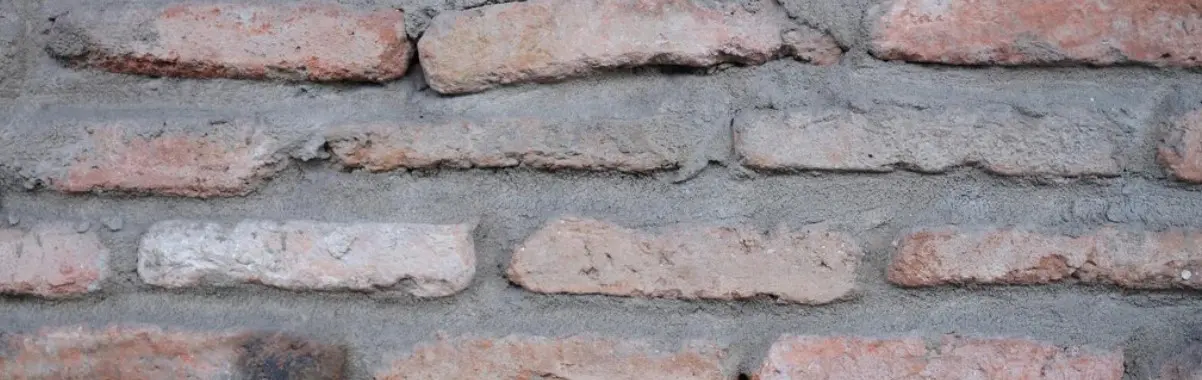
Cleaning can remove what is visible, but it does not correct the moisture condition that brought the salts to the surface. Before choosing a cleaning method, identify what the deposit may be, what the wall system allows you to observe, and what remains unknown behind the brick.
What Efflorescence Is — and What It Does Not Prove
Efflorescence is a visible residue of soluble salts. Moisture moves through brick, mortar, or an adjacent masonry component, dissolves salts within or near the assembly, and carries them toward a surface where evaporation leaves a powder or crystal deposit. The exact salt mixture varies with the brick, mortar, backing materials, water, and surrounding conditions; the appearance alone cannot identify the salt source.
Efflorescence itself is generally not the same as spalling or structural movement. It does show that moisture and soluble material have interacted somewhere in or around the masonry. That does not prove that the brick is structurally damaged, that the deposit came from groundwater, or that one visible area is the entry point. It also does not prove that the wall has a flashing, grading, or drainage defect without further evidence.
The useful distinction is between a primary deposit and a recurring condition. A primary deposit can occur when new mortar, brick, concrete, or another masonry component releases soluble material during initial wetting and drying. A recurring deposit continues because the wall is repeatedly being wetted or because moisture remains available to move salts. The visible powder may be harmless while the repeated wetting creates a separate risk of brick, mortar, or backing deterioration.
How to Tell Efflorescence from Other White Deposits
Not every pale mark on brick is salt residue. Look at the texture, location, timing, and whether it changes after the surface dries, but treat those observations as clues rather than a definitive diagnosis.
- Efflorescence is often dry, powdery, or crystalline and may brush away from the surface. It can return in the same area when the moisture condition persists.
- Mould or mildew is organic growth associated with damp conditions. It may be dark or greenish, and its texture or odour can differ from a dry mineral deposit. Mould and efflorescence can coexist.
- Runoff or rust staining may be brown, orange, black, or streaked rather than powdery white. It can come from metal, soil, fasteners, or material runoff and needs a different investigation.
- Paint, coating, or lime-related failure can flake, chalk, or powder on a painted or coated surface. It may be limited to the coating rather than originating in the masonry.
- Hard crusts or deposits that do not brush away may require a closer look before anyone assumes they are ordinary efflorescence.
If the material cannot be identified confidently from the surface, do not escalate the cleaning method simply because brushing did not work. Misidentification can damage brick or mortar while leaving the underlying condition unresolved.
Why Calgary Conditions Make the Pattern Matter
Calgary’s wetting and drying conditions can make recurring efflorescence more visible and can increase the consequences of moisture that remains in masonry. Snowmelt, rain, wind-driven water, wet soil at the base of a wall, and water entering at openings or transitions can all contribute to wetting. Freeze-thaw exposure matters when masonry has absorbed water: repeated freezing and thawing can worsen cracks, mortar deterioration, and spalling in an already vulnerable assembly.
This is why location and recurrence are more useful than the word “Calgary” by itself. Deposits concentrated near grade may prompt questions about soil, snow, and drainage. Deposits below a window, ledge, roof transition, or other horizontal detail may prompt questions about how that detail sheds water. Deposits along a mortar joint or on one face of a wall may have a different explanation. None of these patterns identifies the source on its own; each helps determine where to inspect next.
A practical record includes the location, the affected brick and joints, whether the deposit returns after wet weather or snowmelt, and whether there are cracks, loose mortar, spalled faces, or interior signs nearby. Photographs taken before cleaning are more useful than relying on memory.
Removing Light Efflorescence Safely
Light, dry deposits on masonry that is otherwise sound and not recurring may be approached as a surface-cleaning issue. The least aggressive suitable method should come first, and cleaning should stop if the brick, mortar, finish, or surrounding materials respond unexpectedly.
Dry brushing first
Use a clean, non-metallic brush on a dry surface to remove loose powder. Avoid grinding the brick face or abrading the mortar simply to make a deposit disappear. Once the surface is clear, observe whether the deposit returns. A clean wall is not evidence that the moisture source has been corrected.
Water cleaning with caution
A gentle water rinse may be appropriate for some masonry, but the result depends on the brick, mortar, finish, weather, drainage, and the ability of the wall to dry. Water can also carry dissolved salts into adjacent materials or drive moisture into open joints and cracks. Do not saturate the wall, direct high-pressure spray at joints or openings, or rinse when the system cannot dry under suitable conditions.
There is no universal Calgary cleaning date or rinse rule. Product and system instructions, the masonry type, current weather, and runoff control determine whether water cleaning is appropriate. If deposits recur after rinsing, repeat cleaning is treating the symptom rather than the cause.
Chemical cleaning is not a routine DIY step
Stubborn masonry deposits may require a cleaner selected for the specific brick, mortar, coating, and stain. Acidic or otherwise aggressive cleaners can etch, discolour, or weaken susceptible brick and mortar, and runoff can damage adjacent surfaces or vegetation. Never use a universal acid recipe, including a generic muriatic-acid dilution, on an unidentified wall.
Professional masonry cleaning may involve product-specific concentration, dwell time, agitation, rinsing, test areas, protection of adjacent materials, and runoff management. Those variables are part of the method, not details that can safely be omitted from a general homeowner instruction. When the masonry is historic, soft, glazed, painted, coated, previously repaired, or otherwise uncertain, obtain advice before using a chemical cleaner.
Cleaning Does Not Correct the Moisture Source
If efflorescence returns, inspect the conditions that can wet the masonry rather than applying stronger cleaner. Questions to consider include:
- Does water collect or remain against the base of the wall?
- Are soil, mulch, vegetation, or snow obscuring the lower masonry or visible drainage details?
- Do roof edges, window sills, ledges, or other horizontal transitions shed water away from the wall?
- Are mortar joints, sealant joints, or penetrations open or deteriorated?
- Are visible cavity-drainage openings or weeps blocked?
- Is there evidence of water entering from an adjacent roof, chimney, window, door, grade, or other connected surface?
Seals and drainage details have different jobs. A joint or transition can help keep water out; a drainage opening allows incidental water that has entered a cavity to leave. Filling a drainage opening, coating over a transition, or adding sealant without understanding the assembly can make the condition harder to diagnose or can interfere with drainage.
Changes to grading, downspouts, flashing, roofing, windows, doors, waterproofing, or drainage systems may fall outside ordinary brick repair. A masonry assessment can identify visible brick and mortar conditions and help determine whether another trade or specialist needs to address a connected source.
When Efflorescence Is a Warning Sign
Recurring efflorescence is a reason to investigate, not proof of one specific failure. The urgency increases when the deposit appears with other changes:
- brick faces are flaking, crumbling, or spalling;
- mortar joints are recessed, loose, cracked, or powdery;
- deposits recur in the same area after cleaning or wet weather;
- staining follows a horizontal detail or concentrates below an opening;
- the wall appears damp, or interior finishes show related moisture evidence;
- bricks or joints are displaced, unstable, or changing over time.
These signs can indicate that moisture is affecting more than the visible surface, but they do not establish the concealed condition without appropriate inspection. Cleaning should not be used to hide a recurring pattern before the wall has been assessed.
When to Arrange a Masonry Assessment
An assessment is appropriate when the deposit is recurring, the source is not obvious, the masonry is deteriorating, or cleaning would require chemicals or aggressive equipment. The assessment should distinguish the visible deposit from the condition of the brick, mortar joints, adjacent details, and any accessible drainage components.
Martini Stone Masonry can assess visible brick and mortar conditions and define a brick-repair or repointing scope where the work falls within its established service. That does not mean Martini universally provides engineering diagnosis, laboratory salt analysis, destructive investigation, roofing, grading or drainage contracting, waterproofing, or exact concealed moisture-path tracing. If the evidence points to a connected building-envelope, roof, window, drainage, waterproofing, or structural issue, the appropriate specialist may need to address that part of the problem.
For the commercial repair path, see Brick Repair & Tuckpointing in Calgary. For related mortar-joint warning signs, see How to Know When You Need Tuckpointing. If the deposit is on a chimney or below a chimney transition, Fireplace & Chimney Masonry provides the relevant connected-surface context.
What Not to Do
Do not assume every white deposit is efflorescence. Identify the material before escalating treatment.
Do not seal, paint, or coat over an active recurring deposit to hide it. A coating may change drying behaviour and can conceal the evidence needed to identify the moisture condition. Whether a sealer or coating is suitable depends on soundness, dryness, compatibility, preparation, and the product system.
Do not use acid or pressure washing as a default. Aggressive cleaning can damage brick, mortar, coatings, adjacent materials, or vegetation, especially when the masonry type and runoff path are unknown.
Do not assume that cleaning solved the problem because the wall looks clear. Reappearance, associated deterioration, and location patterns are more important than the first clean surface.
Related Information
- Brick Repair & Tuckpointing in Calgary — established commercial owner for masonry assessment and repair
- How to Know When You Need Tuckpointing — signs of mortar deterioration and when repointing may be needed
- What Kind of Mortar for Repointing — how mortar compatibility affects brick and masonry repair
Request a Brick Assessment Call 587-227-9122
Sources: Brick Industry Association Technical Notes on Brick Construction — efflorescence, masonry moisture, and cleaning principles. PROSOCO technical literature — product-specific masonry cleaning limitations and procedures. Environment and Climate Change Canada Calgary climate normals — local wetting, drying, and freeze-thaw context. National Research Council of Canada and Codes Canada materials — building-envelope and drainage concepts where applicable; no universal grading or construction-era requirement is asserted here.